How New AI Models Compare to ChatGPT
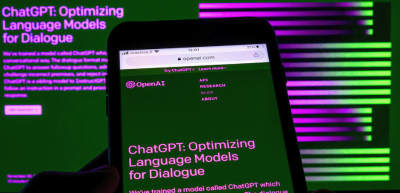
Since OpenAI launched its GPT series models, the field of Natural Language Processing (NLP) has undergone a revolutionary transformation. From the initial exploration of GPT-2 to the large-scale application of GPT-5, and then to the interactive upgrade of ChatGPT, each generation of models has achieved a qualitative leap in performance and capabilities. ChatGPT (Generative Pre-trained Transformer) is a brand-new chatbot model launched by OpenAI. It can not only communicate like a human, but also write emails and create copy. Based on the transformer model, ChatGPT significantly improves the accuracy and controllability of AI in human-computer dialogue by introducing reinforcement learning with human feedback (RLHF). Compared with other AI chatbots, ChatGPT has stronger language understanding capabilities, richer expressive abilities, and generates more natural and fluent text, even capable of answering complex reasoning questions.
Differences between ChatGPT and AI
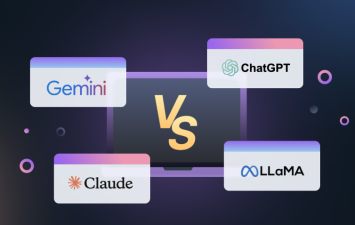
- Technical Differences: ChatGPT is based on a deep learning neural network model, achieving dialogue generation through large-scale pre-training and fine-tuning. AI, on the other hand, encompasses multiple technologies, such as machine learning, natural language processing, and computer vision, which can be combined to solve various problems.
- Application Area Differences: CHATGPT is primarily used in natural language dialogue, serving as chatbots and intelligent assistants. AI, on the other hand, is widely applied in various fields such as healthcare, finance, transportation, and education, capable of handling a wider range of tasks and problems.
- User Interaction Differences: CHATGPT's main interaction method is text-based dialogue. Users ask questions or send commands via text input, and CHATGPT responds in text form. AI offers more diverse user interaction methods, allowing interaction with users through voice, images, touch, and other means.
Future Development Directions of CHATGPT and AI
- CHATGPT's Development Direction: In the future, CHATGPT may continue to achieve breakthroughs in language understanding and generation, improving the quality and coherence of dialogue. It may also develop in multimodal dialogue, combining multiple input methods such as voice, images, and text to achieve a richer and more natural dialogue experience.
- AI's Development Direction: The future development direction of AI will be to achieve more powerful intelligence, including better perception capabilities, more efficient learning capabilities, and faster reasoning capabilities. AI will further deepen its application in various fields, such as medical diagnosis, autonomous driving, and smart homes. Meanwhile, AI will increasingly focus on solving complex real-world problems, including important issues such as environmental protection, social equity, and human well-being.
What is ChatGPT's core breakthrough?
What are ChatGPT's working steps?
ChatGPT's working steps mainly include the following:
- Receiving User Input: ChatGPT first receives user input and then performs preliminary processing.
- Understanding User Intent: By introducing reinforcement learning with human feedback, ChatGPT can more accurately understand user intent.
- Generating Response: Based on the user's intent, ChatGPT generates a corresponding response.
- Evaluation and Feedback: The user evaluates the generated response and provides feedback. ChatGPT optimizes based on the feedback.